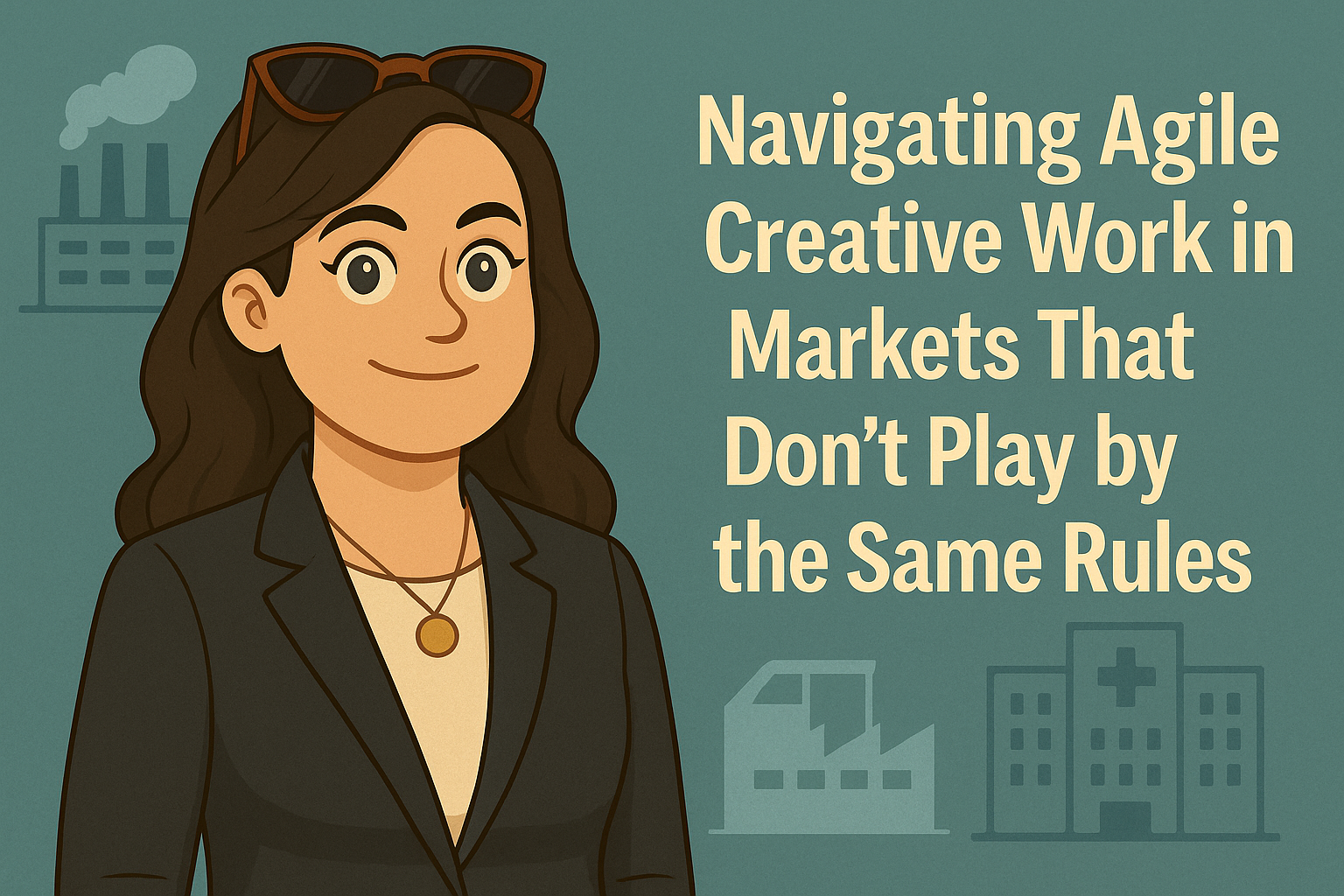
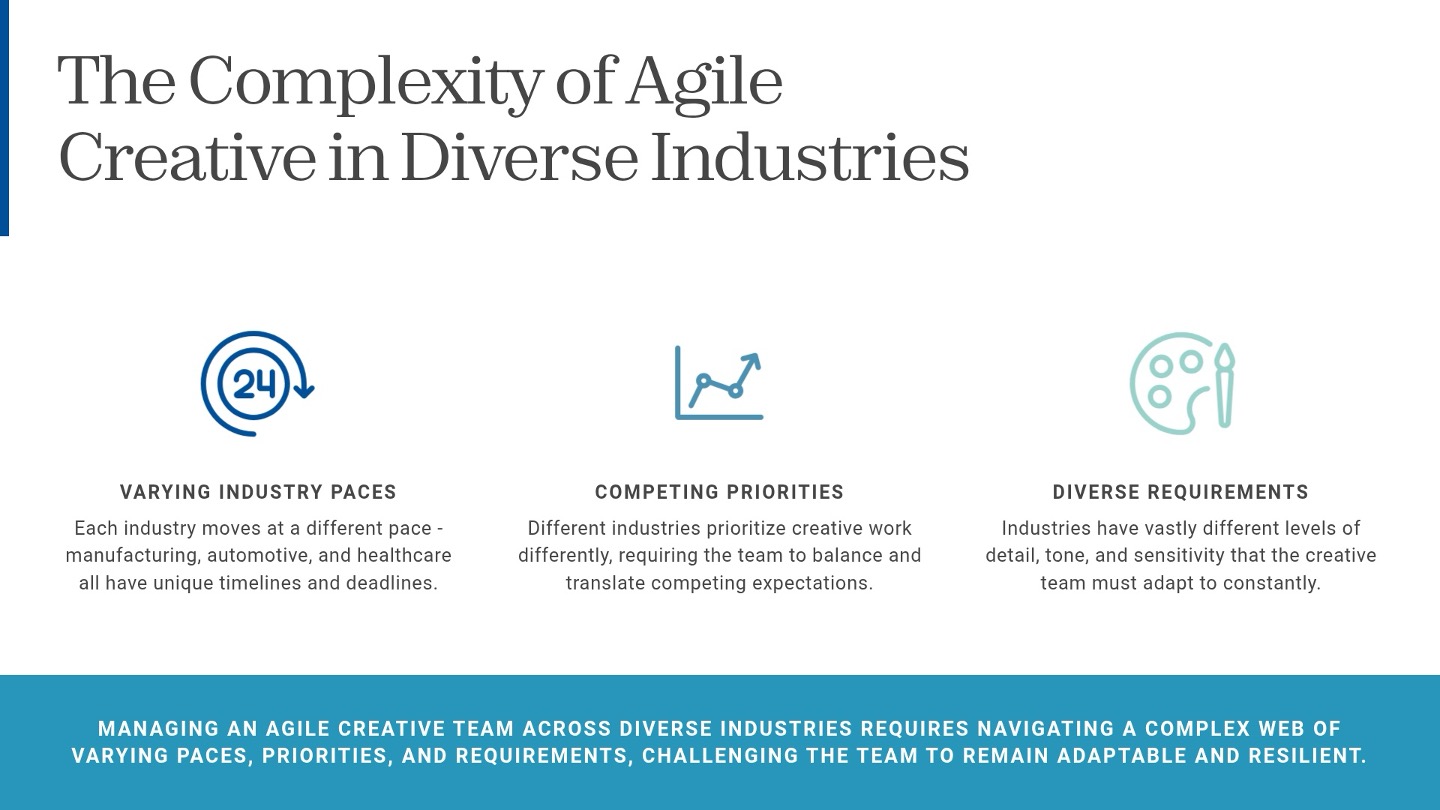
Managing an agile creative team inside a small to mid-sized business is already a demanding job. Doing that work while supporting clients in manufacturing, automotive, healthcare, and other traditionally rigid or highly regulated sectors adds another layer of complexity that many people underestimate. These industries rarely move at the same pace, rarely prioritize creative work the same way, and often require different levels of detail, tone, and sensitivity. For a creative leader, the real challenge becomes building a workflow that keeps talented people motivated while translating competing expectations into something the business can actually deliver.
Agile helps, but not in the clean, textbook style people like to talk about on LinkedIn. In an SMB, agile is more about survival than ceremony. Stand-ups become quick gut checks to see who is dealing with a last-minute automotive revision and who is buried under a healthcare compliance review. Sprint planning is half strategy, half forecasting based on instinct, because priorities change fast and without warning. Retrospectives turn into open conversations about what actually worked and what has to change before the next sprint crushes the team.
The real pressure comes from context switching across industries that expect entirely different things from the creative process. Manufacturing clients want clear technical value. Automotive clients thrive on speed, emotional energy, and flash. Healthcare requires accuracy, empathy, and a heavy dose of regulation. The team has to shift their mindset constantly, sometimes several times a day, and it takes a toll. One moment a designer is building a high-energy performance concept for an automotive social campaign. The next they are reworking careful, regulated copy for a healthcare partner. Those transitions are not just technical. They are emotional. And creative people feel that weight.
That is where leadership becomes more than traffic control. You become the advocate, the translator, the person who shields the team from unrealistic demands. You help account managers understand why a healthcare request cannot be turned around in the same window as a manufacturing flyer. You guide clients through the differences in tone and messaging across industries. You explain why creative work cannot be compressed into an afternoon because someone in a sales role promised it would be ready soon. You protect the process because that protection is what allows your team to do their best work.
Layered into all of this is a challenge that deserves more open discussion. Many of these industries are still heavily male-driven. For women in creative leadership roles, navigating these environments often requires extra effort and emotional bandwidth that rarely gets acknowledged. Manufacturing and automotive in particular tend to default to male-dominated decision-making structures. Meetings may be filled with long-standing networks that have worked together for years. The tone may be blunt or dismissive. Creative work might be undervalued because it is not seen as technical. And the leadership voice behind it may be underestimated simply because it is coming from a woman.
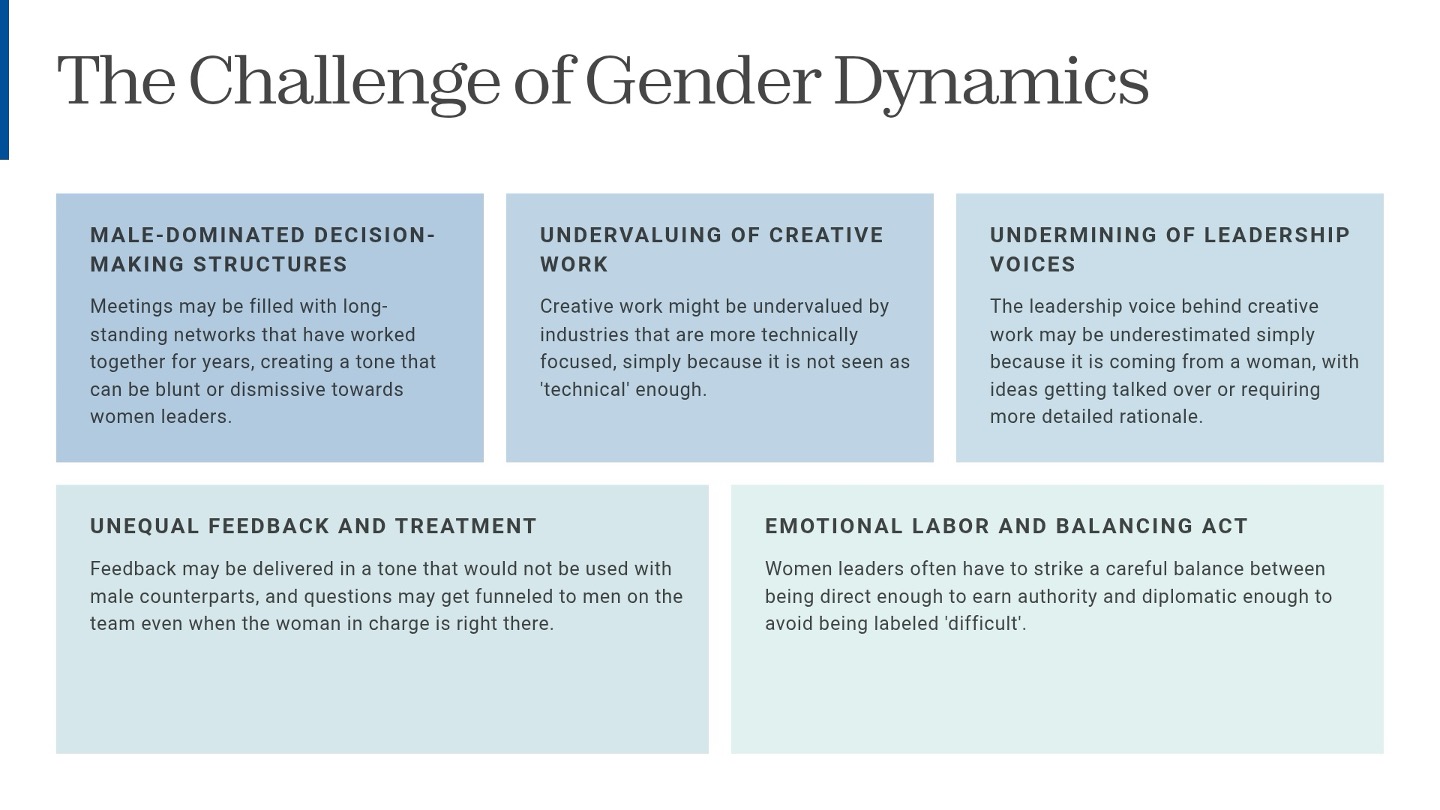
That dynamic shows up in subtle ways. Ideas get talked over. Detailed rationale has to be provided when others might be taken at face value. Feedback is delivered in a tone that would not be used with male counterparts. Questions get funneled to men on the team even when the woman in charge is right there. Women leaders often find themselves doing extra work just to be heard, let alone respected. That extra work sits on top of the day-to-day creative and operational load.
Inside an SMB, where clients expect personal relationships and quick communication, this dynamic becomes even more visible. Women leaders often have to strike a careful balance between being direct enough to earn authority and diplomatic enough to avoid being labeled difficult. When industries are accustomed to traditional hierarchies and gender norms, standing firm can feel like walking a tightrope. And yet, women continue to lead creative teams that deliver exceptional work across every market.
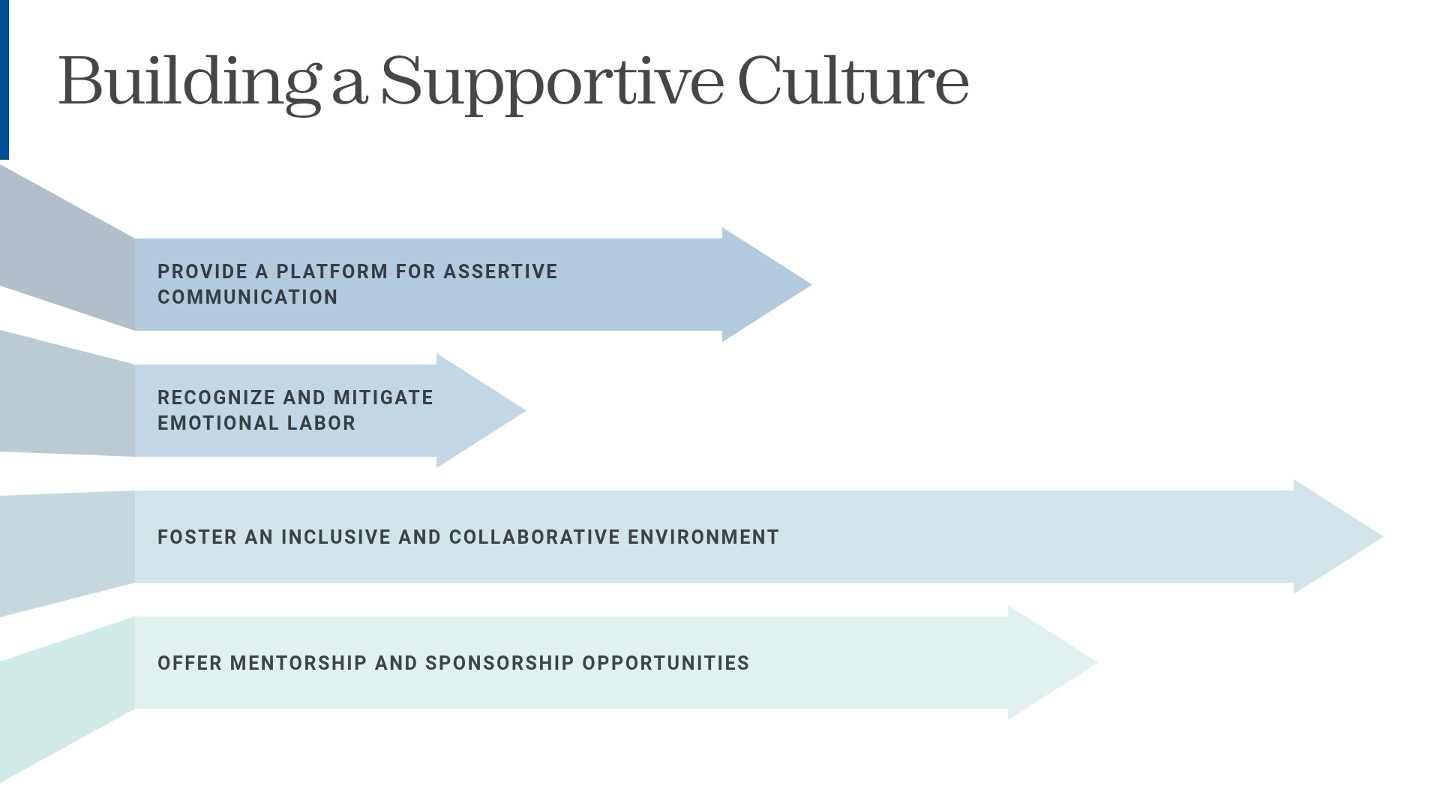
Good leaders acknowledge this reality, and great leaders build teams that support each other through it. It is important to create an environment where women in creative leadership feel empowered to speak plainly, set boundaries, and stand behind their expertise without having to soften their voice to make others comfortable. The team benefits when leadership feels confident and respected. Clients benefit when they work with someone who brings clarity and direction. And the work itself improves when the leader is not fighting against unnecessary friction.
Supporting women in leadership also means recognizing the burden of emotional labor they often carry. In creative environments, women tend to be the ones smoothing over client tension, interpreting vague feedback, and helping teammates decompress after difficult meetings. This is valuable work, but it can also be draining. Leaders need the space to lead, not to spend their energy navigating gender dynamics that should have evolved years ago. Giving women leaders room to focus on strategy, vision, and creative direction, rather than just relationship management, builds a healthier and more effective team.
Despite the challenges, there is real reward in this work. Leading an agile creative team across diverse industries exposes you to more perspectives and more stories than you would get anywhere else. The pace is fast, the expectations are high, and the learning curve never flattens. You learn how to guide your team through complexity with clarity and patience. You learn how to help them find the thread of the story even when priorities collide. You learn how to build trust in environments where trust is earned slowly. And when the work lands well, when the team delivers strong creative across three or four vastly different markets, that success feels more meaningful because it was hard-earned.
A strong creative culture becomes a competitive advantage for the business. When a team feels protected, supported, and inspired, they produce better work. When women in leadership are given the respect and space to lead without unnecessary barriers, the entire organization benefits. Their perspective strengthens the work. Their approach to communication elevates client relationships. Their ability to multitask, adapt, and problem-solve is an asset in industries where agility is essential.
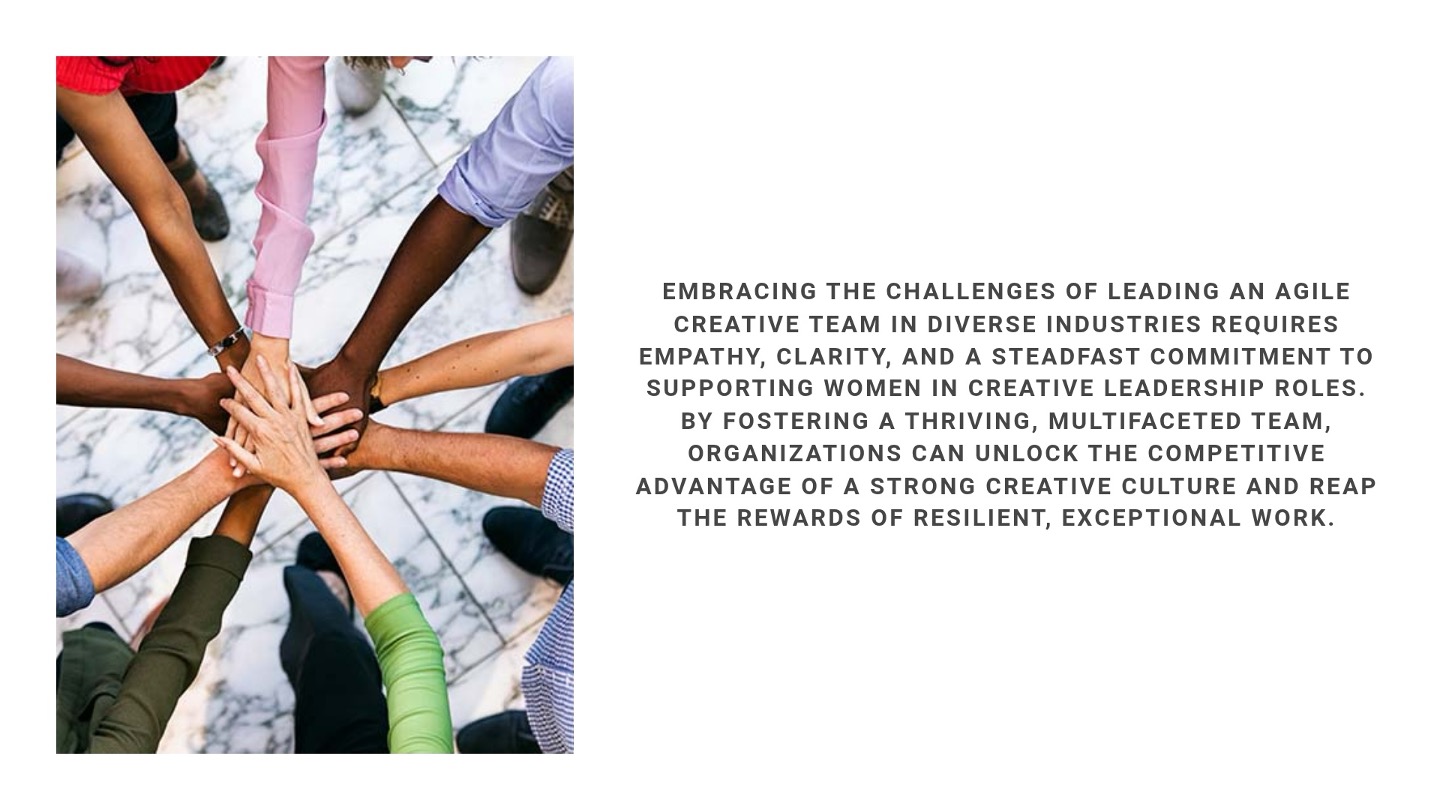
In the end, managing an agile creative team inside an SMB, while navigating diverse industries and unequal gender dynamics, is not about chasing perfect processes. It is about leading with empathy and clarity. It is about recognizing the unique pressures your team faces and helping them move through those pressures with confidence. It is about setting the tone for how clients interact with your team. It is about advocating for people who often have to fight harder to be taken seriously. And it is about holding the creative vision steady even when the work shifts, the industries pull in different directions, and the expectations feel impossible.
For creative leaders living this reality every day, know that the chaos is part of the job, but so is the reward. The more you invest in building a supportive culture, the stronger your team becomes. The more you help women leaders navigate traditionally male-dominated industries, the more resilient and respected your team becomes. And when your team thrives, your clients feel it, the work reflects it, and your business grows because of it.